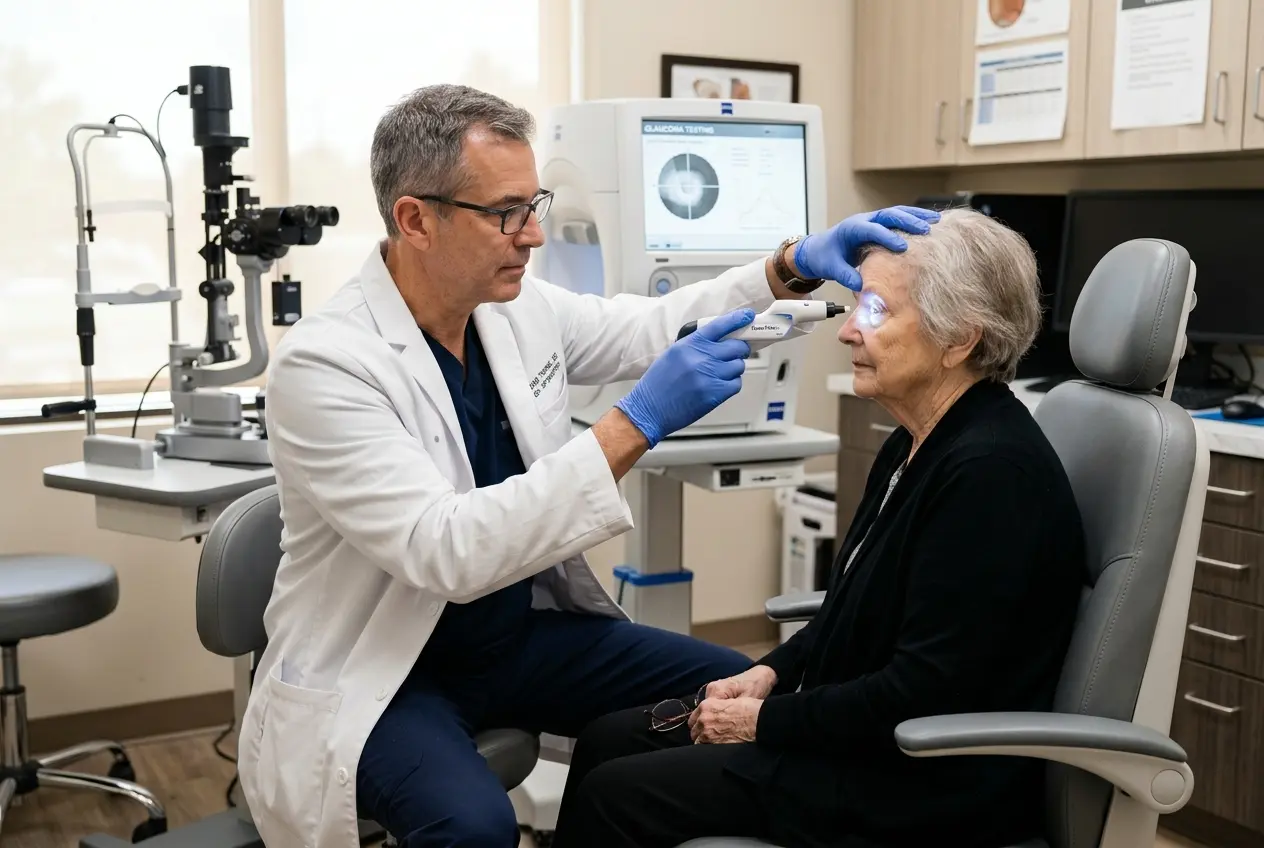
Glaucoma often develops without symptoms, making regular testing essential. Richmond’s African American population has higher risk, and our thorough screenings help detect this “silent thief of sight” early.
We use several diagnostic tools including tonometry to measure eye pressure and OCT scans to assess optic nerve health. For patients in Church Hill or Jackson Ward with family history of glaucoma, we recommend annual testing.
If we detect elevated pressure or suspicious findings, we’ll discuss treatment options ranging from medicated drops to laser procedures. Early intervention can prevent vision loss, allowing you to continue enjoying Richmond’s historic architecture and vibrant arts scene with clear sight.
We use several diagnostic tools including tonometry to measure eye pressure and OCT scans to assess optic nerve health. For patients in Church Hill or Jackson Ward with family history of glaucoma, we recommend annual testing.
If we detect elevated pressure or suspicious findings, we’ll discuss treatment options ranging from medicated drops to laser procedures. Early intervention can prevent vision loss, allowing you to continue enjoying Richmond’s historic architecture and vibrant arts scene with clear sight.
Our Process
- 01 Step 1: Measure intraocular pressure
- 02 Step 2: Evaluate optic nerve health
- 03 Step 3: Assess peripheral vision
- 04 Step 4: Review risk factors and recommendations
Benefits
- Early detection of glaucoma
- Advanced diagnostic technology
- Personalized monitoring plan
- Peace of mind about eye health
Frequently Asked Questions
Who should get glaucoma testing?
Adults over 40, African Americans over 35, those with diabetes or family history need regular screenings. Richmond’s demographics make testing particularly important here.
Does glaucoma testing hurt?
Tests are painless. The air puff test might startle you briefly, but we also use contactless methods for more comfortable screening.
If I have glaucoma, will I go blind?
With early detection and proper treatment, most patients maintain useful vision lifelong. Compliance with prescribed eye drops is crucial.